
History of Holy Isle
Holy Isle has been a place of spiritual significance for over fourteen centuries. From the hermitage of the Celtic saint Molaise in the 6th century, through Viking visits and monastic settlement, to its rebirth as a centre for retreat and interfaith dialogue under the Holy Isle Project — the island carries a rich and layered history. Explore it below.
Through the Centuries
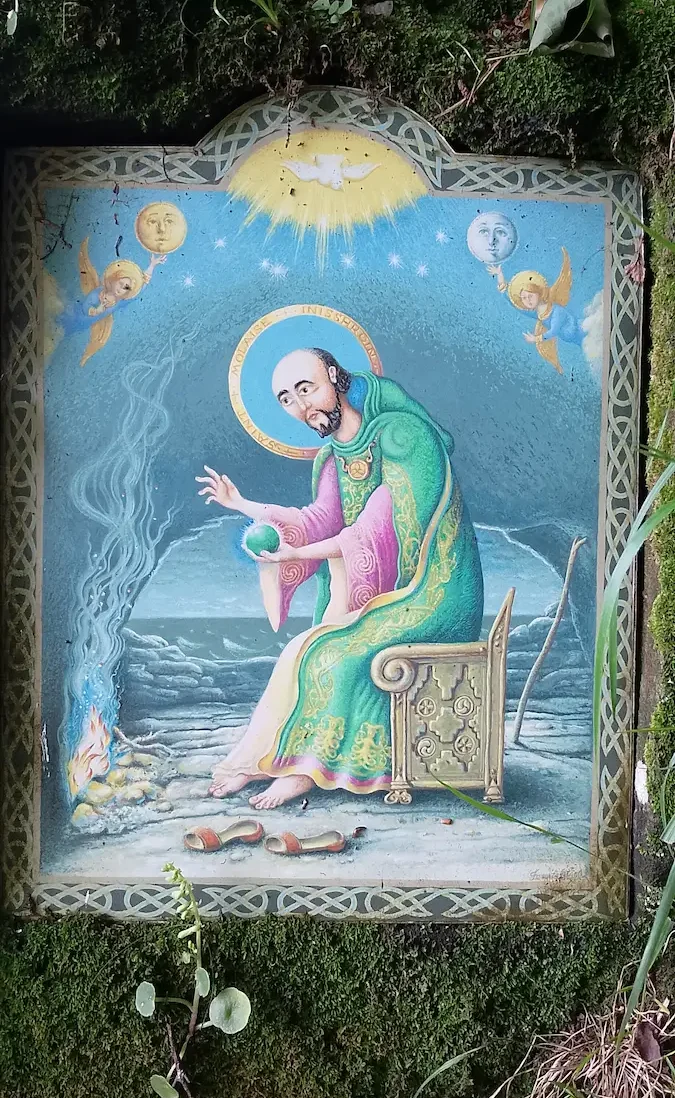
Saint Molaise
St. Molaise (566 – 640 A.D.) was born in Ireland, the son of Cairell, the Irish king of what is now called Ulster, and the Scottish princess Gemma. Molaise was a very gifted and spiritually inclined child. He was much loved by his own people and was offered the throne of Ulster when he came of age, but instead he chose a religious and secluded life in a cave on the west coast of Holy Isle. He was then only 20 years old. Some people believe that when St. Molaise chose the cave on Holy Isle as his hermitage, the island was already considered a special, “holy” place.
When he was about 30 years old, Molaise went to Rome and was ordained as a priest by Pope Gregory the Great. When he returned, he entered the great monastery in Leighlin, Ireland which St. Gobban had established. Soon after he became its abbot. Under his guidance the monastery grew in fame and number to about 1500 monks. Molaise played an important part in adopting the controversial Roman method of dating Easter within Ireland. This was an important issue among the different Christian churches, who debated it for several centuries. When Molaise was in his late 50s, he went back to Rome and was consecrated first Bishop of Leighlin by Honorius I. Historians are divided on when Molaise died, estimating between 638 and 641. His feast day is celebrated both in Ireland and Scotland, on the 18th of April.
St. Molaise’s Cave and the Healing Well

The cave where St. Molaise lived, is about half way along the western shore of Holy Isle, about ten meters above the high-water mark, and consists of an overhanging sandstone rock with a sunken stone floor. It is thought that in Molaise’s time much of the opening of the cave was closed up by a wall to keep the weather out. The cave can still be visited today. Carvings can be seen in the wall, such as simple crosses, perhaps made by pilgrims, and Norse runes, mainly of personal names. Some of the crosses seem to have been carved at around the same time as the names, so perhaps there was an element of pilgrimage to the cave among the Vikings. Lastly, there is an unusually designed cross carved into the roof of the cave.
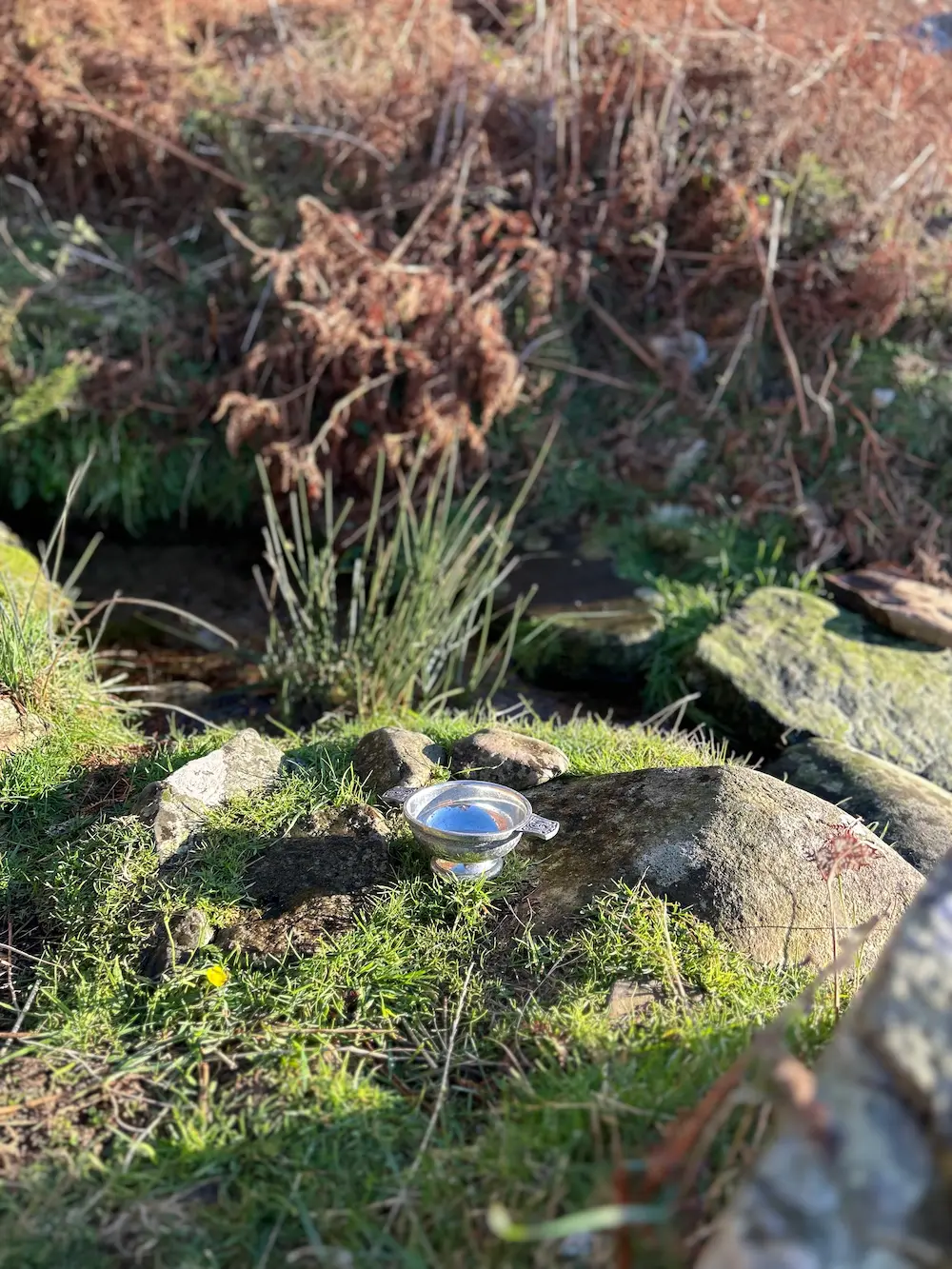
Close to the cave is a spring, known as the Healing Well which is thought to cure ills and bring blessings. In the 18th century it was recorded that “the natives used to drink and bath in [the well] for all lingering ailments”. The same source describes the water as “gushing out of a rock”. At the beginning of the 20th century apparently there was a cistern present built of masonry, with a stone spout which delivered the water. The spring is still cold and clear.
The Dukes of Hamilton
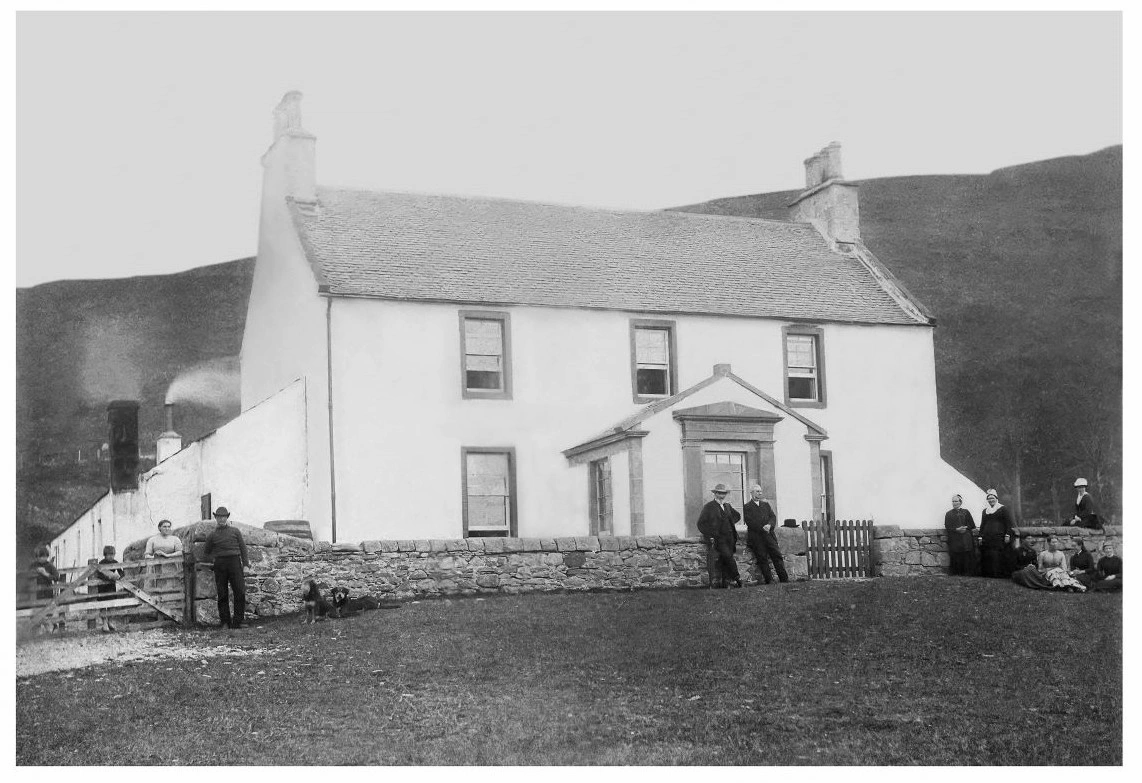
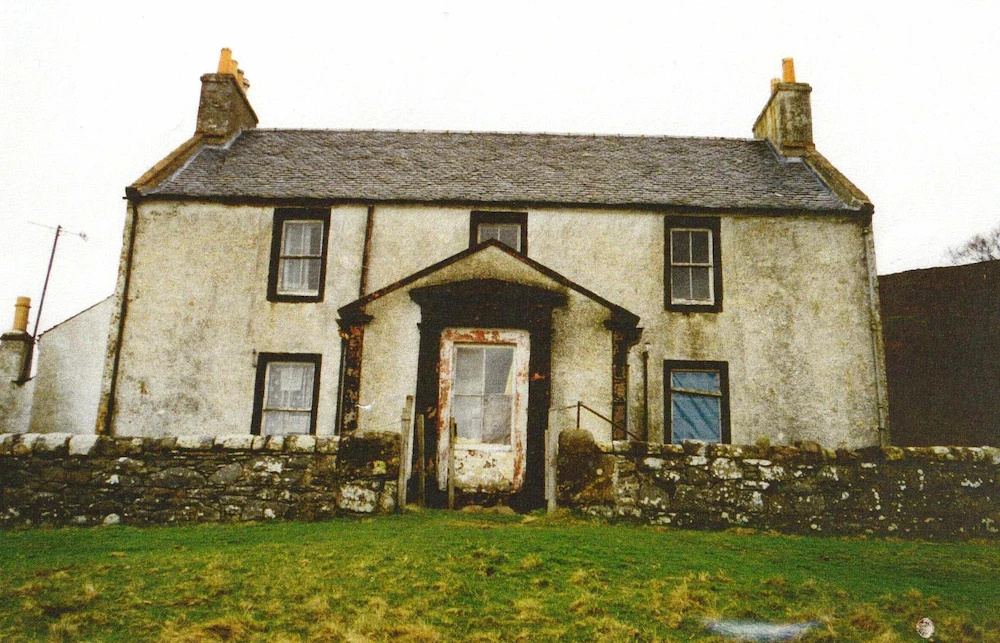
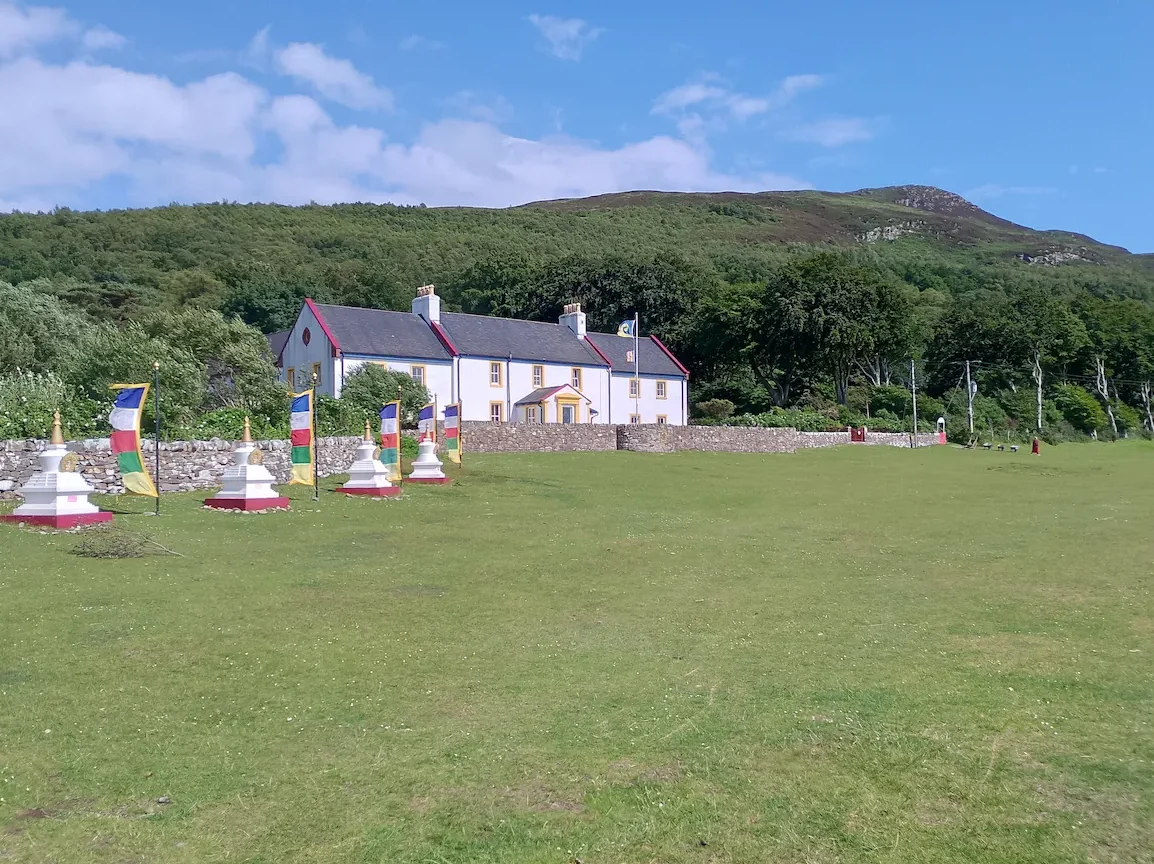
In 1488 Holy Isle and land in the Lamlash area was owned by one John Hunter, before being passed over to the Earl of Arran in 1527. The island continued to be part of the Arran Estate in Hamilton ownership even into the 20th century, being rented out to various people until that time. In the 18th century, Captain James Hamilton (not related to the dukes of Hamilton who owned Arran) obtained a long lease on Holy Isle from the Duke of Hamilton. In 1779 he built what became known as the Big House (the old farmhouse, now called the Harmony Wing).
Lighthouses
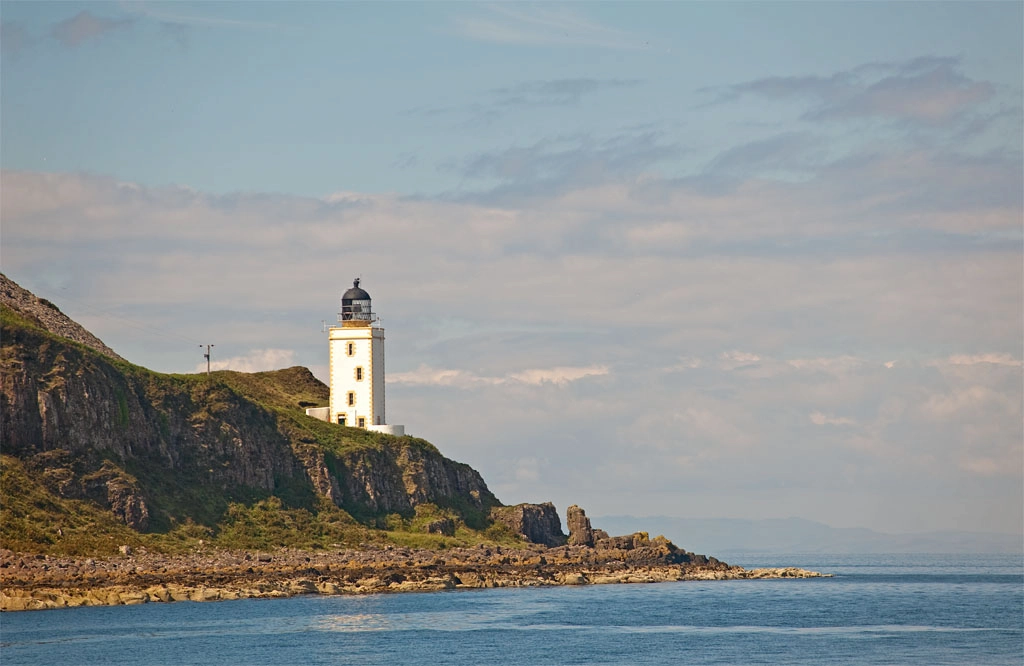
In 1877 the inner lighthouse (facing Arran) was built on Holy Isle, engineered by David and Thomas Stevenson. It is locally known as “Wee Donald”, though the current lighthouse keepers don’t know why anymore. The outer lighthouse, or Pillar Rock, was built in 1905 on the east shore. It had a fog horn and a revolving light that was lit by paraffin. Pillar Rock lighthouse was the first lighthouse built with a square tower and has several rooms inside for the men who worked there. Lighthouse cottages were built to house four families of the lighthouse keepers and a walled garden was made. The lighthouses became automated in 1977.
The Morris Family
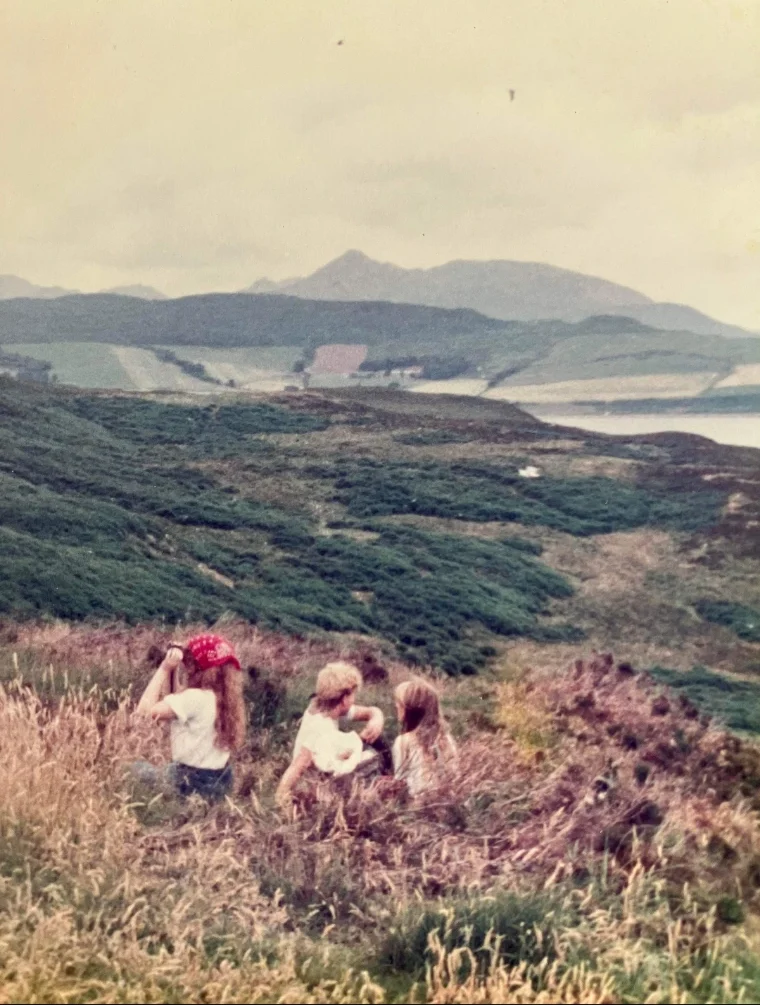
In April 1984, after having been on the market for 20 months, the island was bought by James and Catherine Morris for £120,000. They moved into the farmhouse the following summer with their two young sons. They managed to connect electricity from the south end to the north, which made living in the farmhouse much more comfortable for them. In 1990 all the Highland cattle and seven ponies were taken off the island, leaving the Saanen goats, the Soay sheep and five Eriskay ponies.
In 1987 they decided to put the island up for sale for £1 million. The island remained unsold however, and in the autumn of 1990 Mrs Morris approached Lama Yeshe to offer the island to him, because she felt that its future would be best taken care of by “the Buddhists from Samye Ling”. Lama Yeshe first came to Holy Isle on the winter solstice of that year and became determined to buy the island. Finally the asking price was dropped to £350,000, which Lama Yeshe managed to raise by April 1992.
Recent History
A Dream Realised
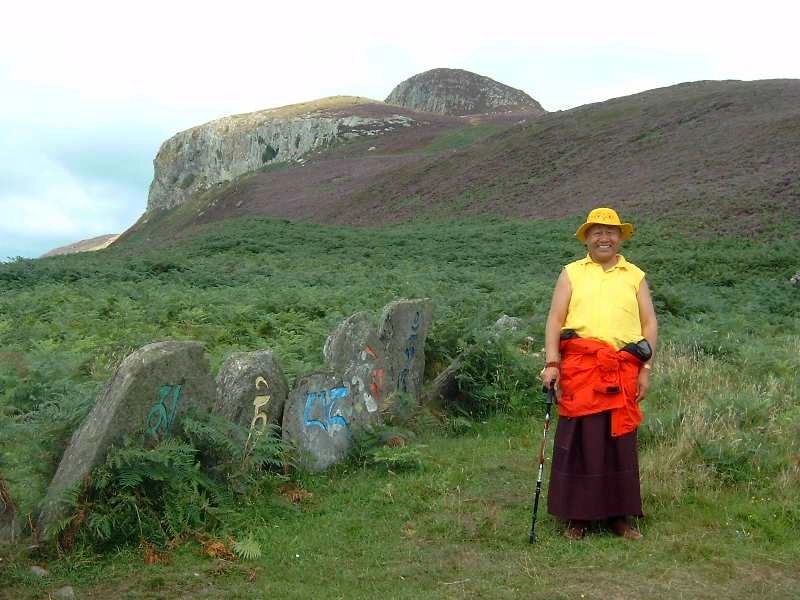
In the early 1980s, Lama Yeshe Rinpoche was practising dream yoga during a retreat in the United States, and in his dream he visited an island. Although he had never seen or heard of this island before, in his dream he felt that this was a place where human beings and all life forms could live in harmony — a place that would nurture understanding and trust between people of different beliefs and faiths.
It was not until 1990 that Lama Yeshe was approached by Mrs Kay Morris, who owned Holy Isle together with her husband. Mrs Morris, a devout Catholic, had been instructed by Mother Mary in a dream to pass Holy Isle to him, to be used for peace and meditation. When he made his first visit on the winter solstice of 1990, Lama Yeshe saw the twinkling lights on the shores across the bay and recognised the island from his dream. He felt inspired and confident to reawaken the island’s sacred past and develop it as a place of retreat where peace would be easy to find, not only for Buddhists, but for people of all faiths. After a massive fundraising effort and generous donations from thousands of people from all over the world, the island was signed over on the 18th of April 1992.
Renovation and Conservation
After the overwhelming generosity of so many people that enabled the buying of the island, the real work was now to begin. The buildings both at the north and the south end had been uninhabited for years and were in a semi-derelict state, having suffered from wind, rain, dry-rot and vandalism – so the first step was to renovate them. A few dedicated resident volunteers, together with many volunteering guests, restored the lighthouse cottages at the south end. In November 1995 the first one year retreat was able to begin there.
A plan for nature conservation was drawn up by experts from the Nature Conservancy Council in collaboration with the Scottish Wildlife Trust. A start was made with the planting of thousands of indigenous trees. The tree areas were fenced off so that they would be safe from the animals. Measures of controlling the bracken to create more grazing grounds, and eradicating the invasive rhododendrons began.
The Centre for World Peace and Health
In 1996 planning permission for the Centre for World Peace and Health was granted. Lama Yeshe decided to build the Centre to incorporate the existing farmhouse, despite the extra efforts and costs involved. The renovation was done entirely by volunteers and took several years to complete. Two wings containing guest rooms and a spacious dining room rose on either side of the farmhouse, leaving a courtyard in the middle enclosed by the Peace Hall — a space to host courses, workshops and conferences. Throughout the build, ecologically sound materials and methods were used wherever possible.
On the 31st of May 2003 the Centre officially opened its doors to the public, welcoming guests and retreat participants from around the world.