
Environmental Stewardship
From the beginning, the stewardship and care of Holy Isle’s beautiful natural environment has been central to the Holy Isle Project — working to address the spiritual value of land through restoring and conserving the natural ecology.
The Centre for World Peace and Health was designed to incorporate the existing farmhouse into a new building, guided by seeking a compromise between form, function and environmental considerations. The final design minimises the environmental footprint of the building process upon the island while providing a modern facility for its guests. Wherever possible environmental sustainability has been the guiding principle:
- Solar panels are being installed to help heat the water for the Centre
- All the insulation materials used are environmentally friendly
- Sewage is processed using a reed-bed system, resulting in almost clear water being discharged into the sea
- Much of the furniture for the Centre was designed and made by a former resident of the island, using oak from a sustainable forest source.
- The “Shieling Dryer” provides a green alternative to the energy-consuming tumble dryer in our ever-busy guesthouse laundry.
Conservation in Practice
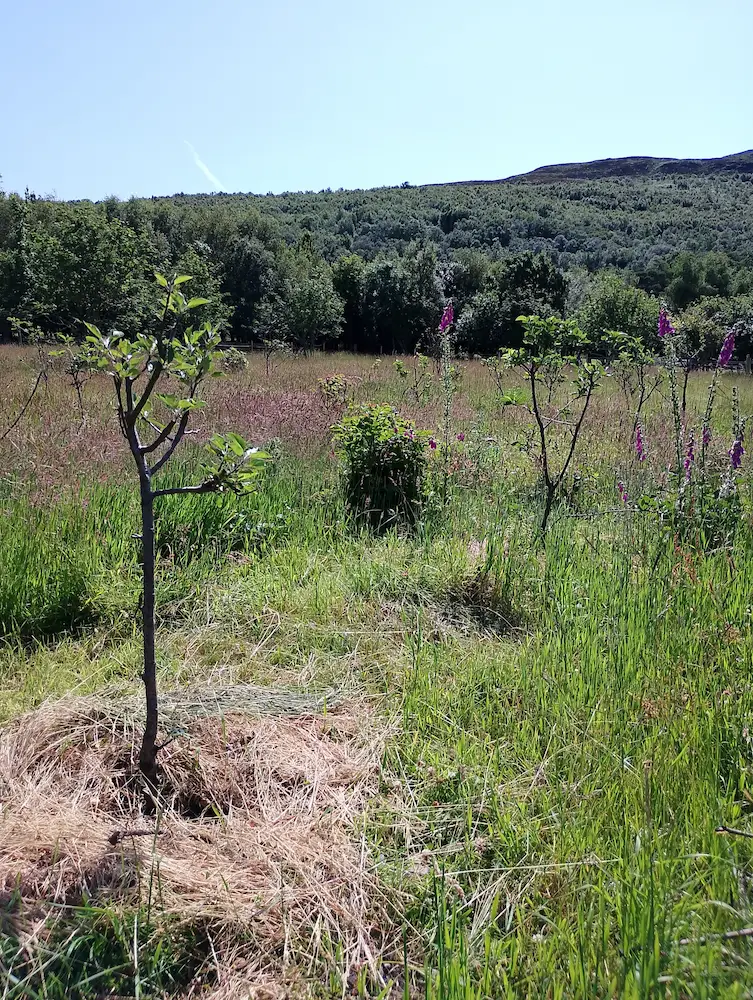
Reforestation with Native Species
Around 35,000 trees have been planted in various areas of the island to recreate a woodland habitat that will support biodiversity, provide future shelter for the wildlife.
We continue to plant native tree species in order to re-wild the island.
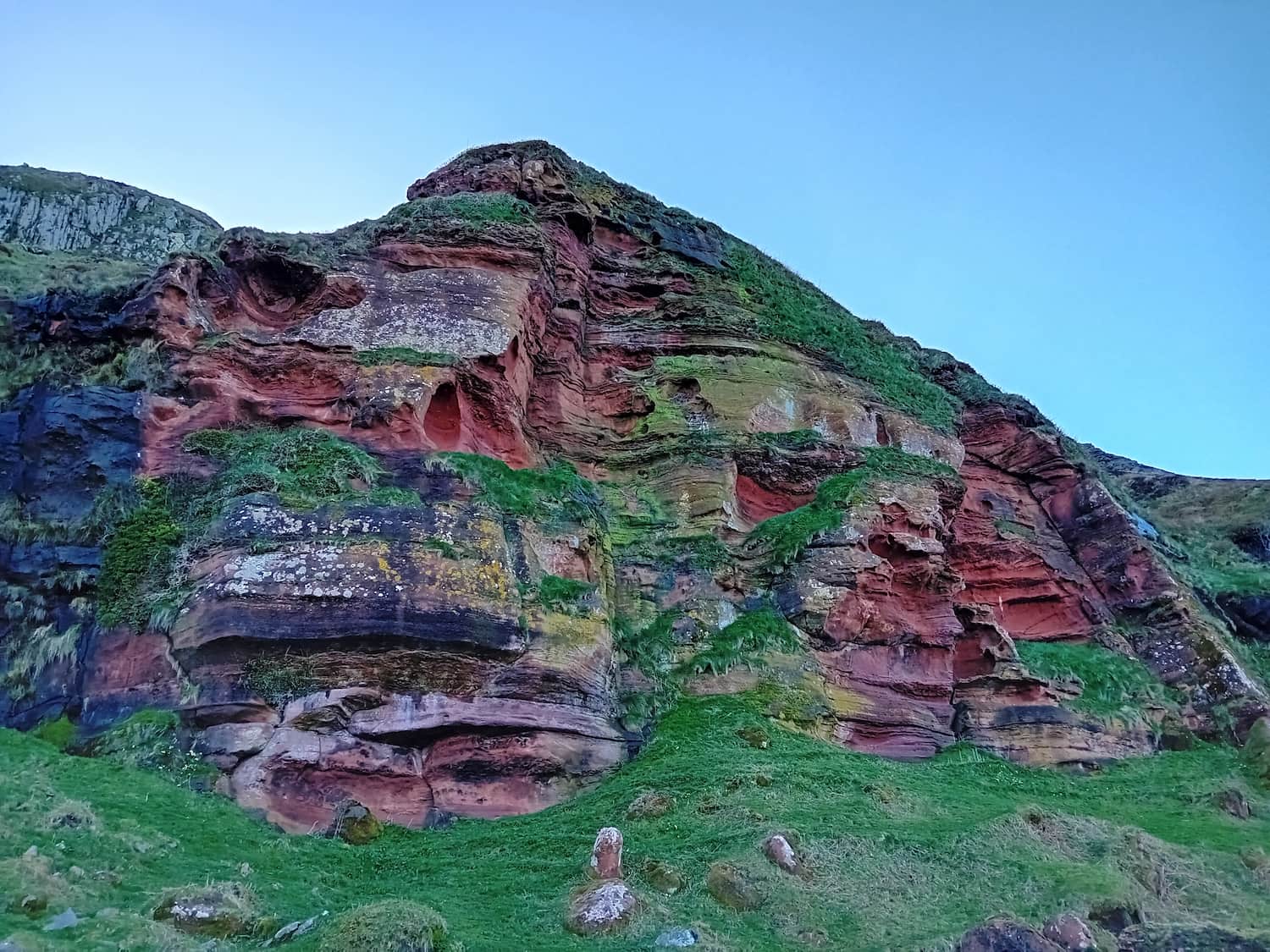
Nature Reserve
The east coast of Holy Isle has been designated as a nature sanctuary for the animals, birds, and sea-life. Visitors are respectful of this voluntary boundary and the wildlife is now flourishing.
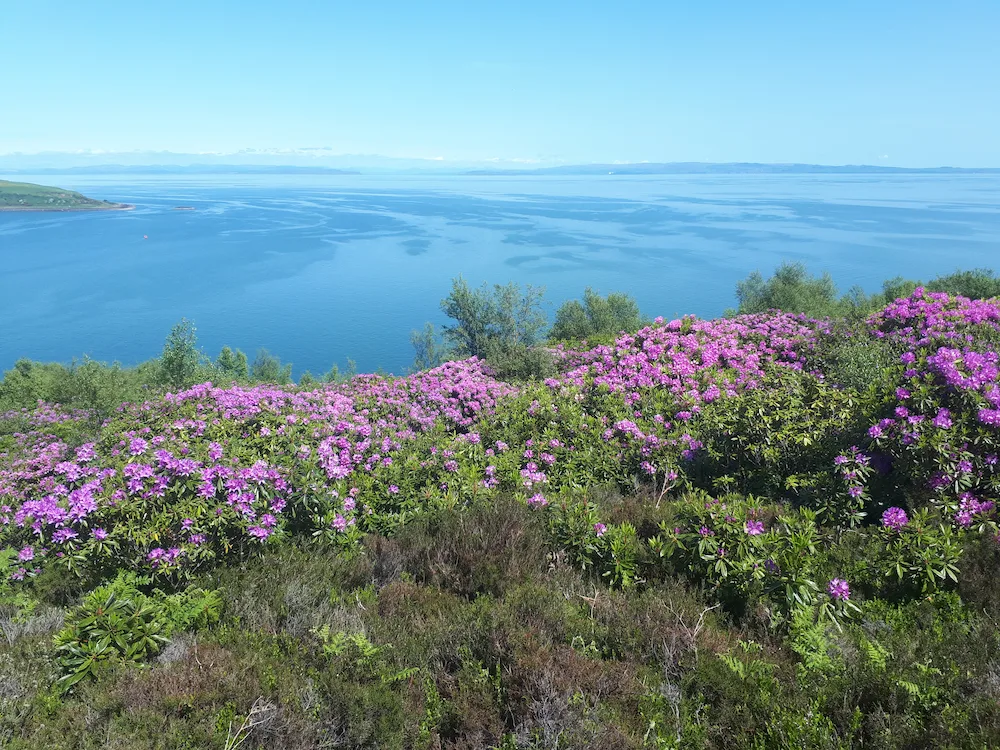
Rhododendron Control
Despite the beauty of its flowers, the rhododendron, introduced to Arran in Victorian times and subsequently to Holy Isle, has a toxic quality that lets it colonise the landscape by creating a poisonous soil base that prevents the growth of other species. The rhododendron eradication programme is a long-term management objective to provide space and opportunity for native species to flourish.
Bracken Control
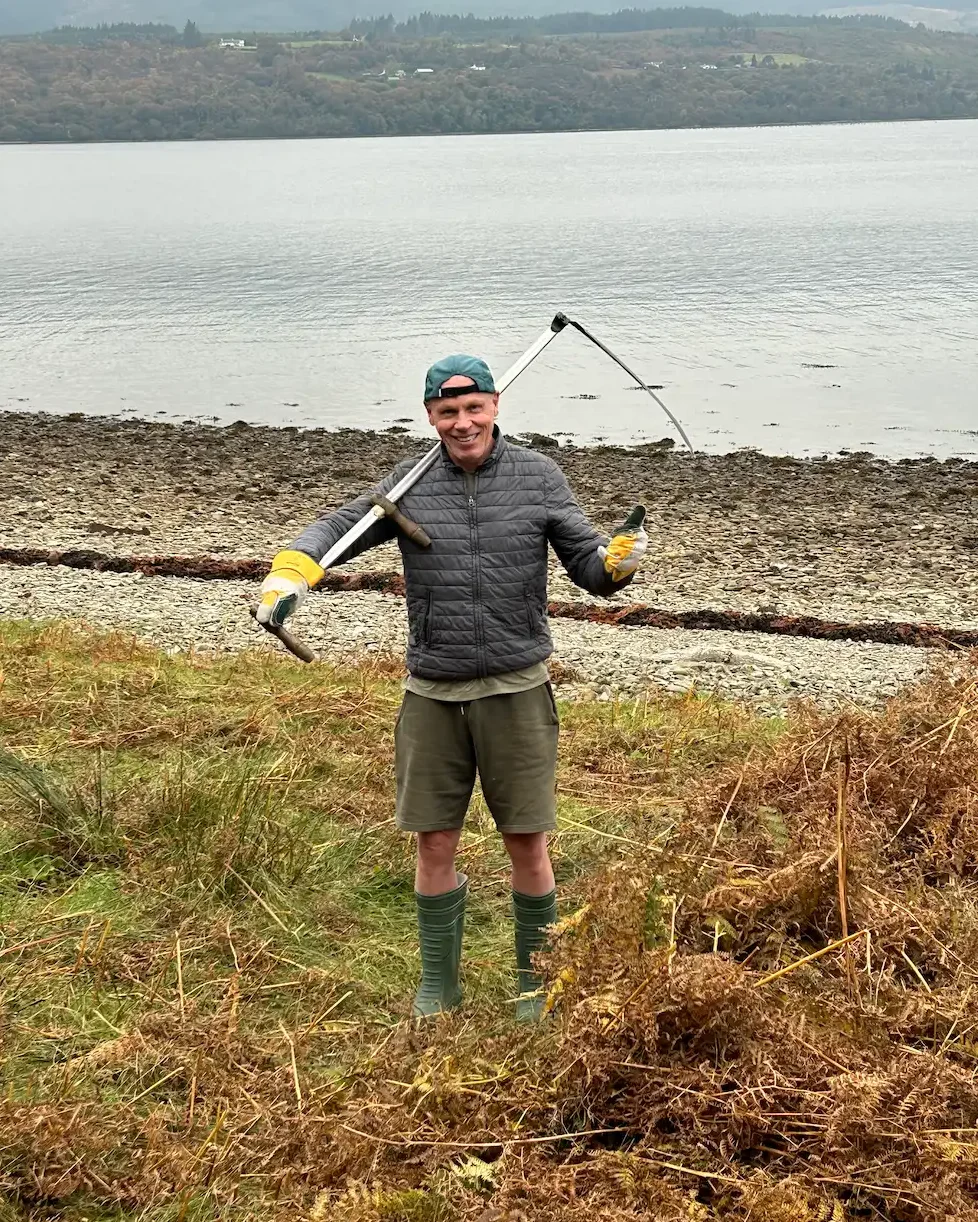
Similar to rhododendron, bracken is also a non-native species introduced in Victorian times for its decorative quality and is very successful at colonising all available land. Bracken has been controlled in a few sites on the island and this shows signs of enabling other species to return. It is also important to clear spaces for pasture land for the grazing animals of the island.

Soil Conservation
Throughout the world, the erosion of topsoil through intensive farming practices and the spread of the urban landscape places soil preservation top on the list for resource management. On Holy Isle, we are restoring existing soils and creating new soils for organic food production through the use of local resources such as pony manure, seaweed, and bracken. This is a long term management objective which will enable present and future generations to benefit from our actions.
Dry-stone Dykes
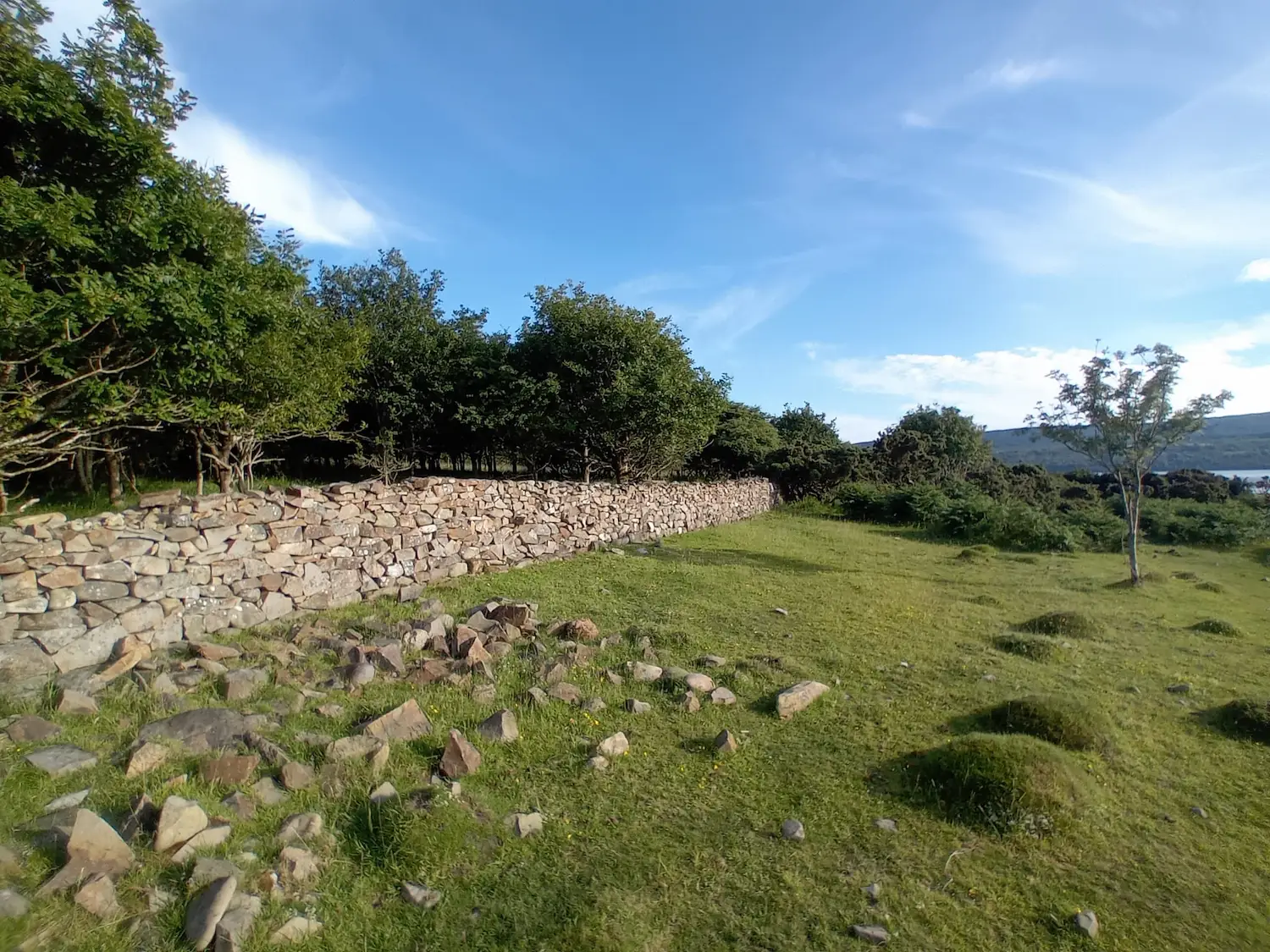
Holy Isle has some very fine examples of dry stone dyking thanks to the island’s ranger. Original walls have been restored and new walls added.
Trees
“The commitment to environmental protection through planting new trees and taking care of the existing ones, is rapidly increasing all over the world. At the global level, trees and forests are closely linked with weather patterns and also the maintenance of a crucial balance in nature. Hence, the task of environmental protection is a universal responsibility of all of us.”
His Holiness the Dalai Lama
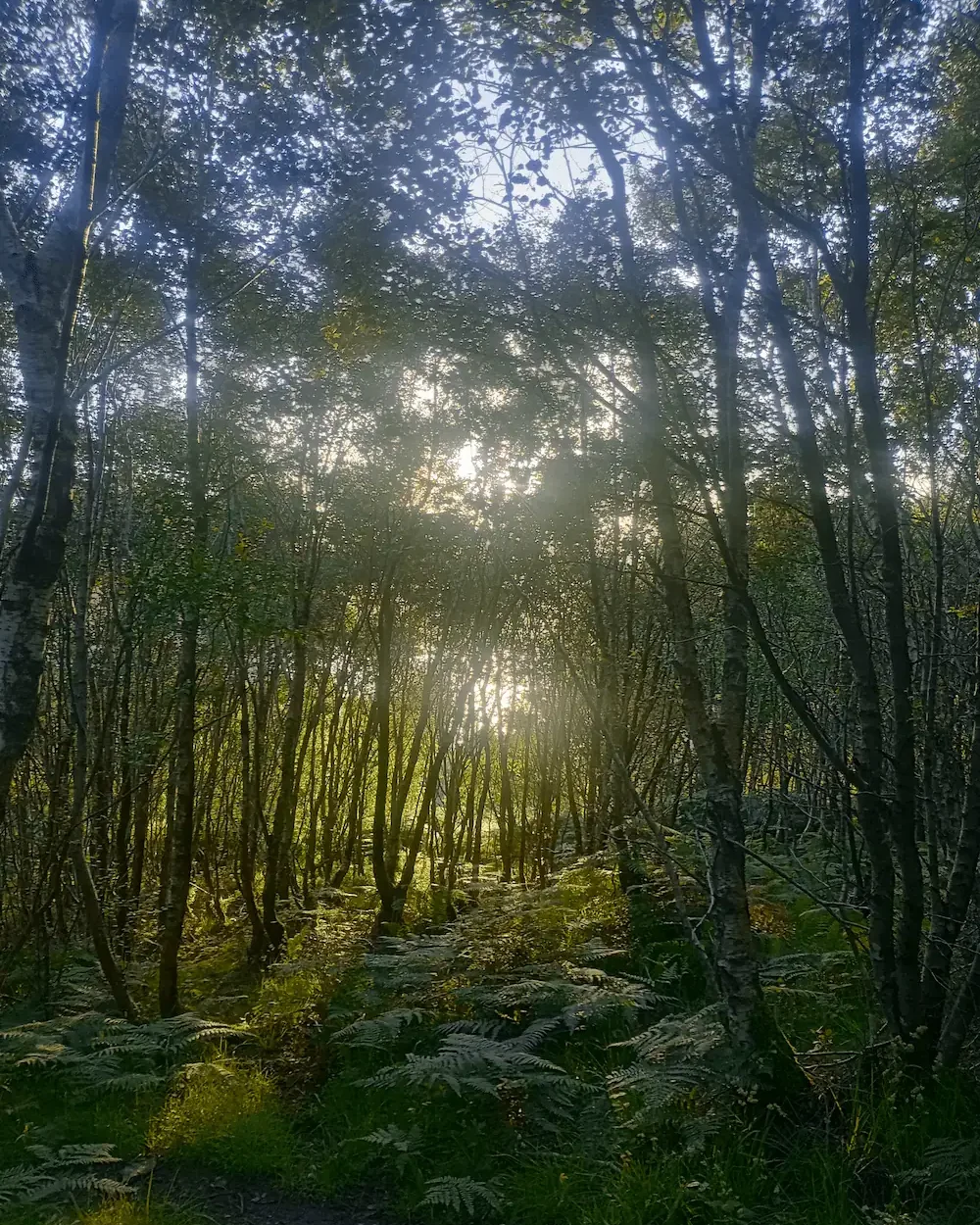
Historically, Scotland was once covered in a vast forest. However, excessive tree felling, heavy grazing, and frequent burnings brought an end to this forest. Because of its exposure to rough weather, Holy Isle was probably not completely covered in trees. Nevertheless, environmental experts agree that planting trees and allowing the spontaneous seedlings to grow is good both for the island and the planet as a whole.
Between 1993 and 1996, 27,000 trees were planted by volunteers, guided by a professional forester. This number rose to 30,000 in 1997, and 35,000 by 2006. All the trees planted are native Scottish species, most grown from local seeds.